For too long, the fascinating history of this small patch of Tampa has been lost from common memory. I hope the history of Borrell Park inspires the neighborhood to appreciate the present by connecting us to our past. The history of Borrell Park involves some of Ybor City and Tampa’s most noteworthy families. From wilderness, to homestead, to real estate, to city park, this site is emblematic of Tampa’s evolution as a city and provides a lens through which to observe the changes in our neighborhood through time.
From Wilderness to Homestead
From the very beginning of its history, the Borrell Park site has been associated with some of Tampa’s most notable families. Florida joined the United States as the 27th State in 1845. It wasn’t until seven years later, in 1852, that the land surrounding Fort Brooke and the small village of Tampa would be surveyed and sectioned into land for homesteaders to claim. The Borrell Park site remained untouched wilderness until pioneering families improved the land and were granted homestead rights by the United States government.
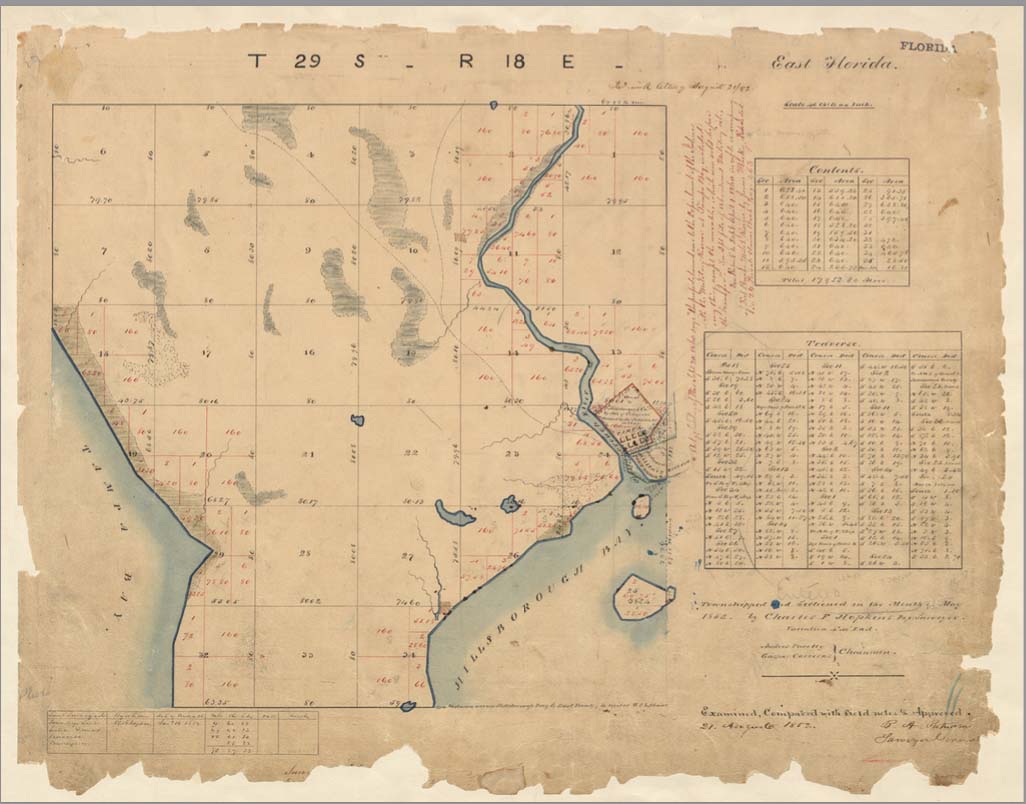
Hillsborough County Survey
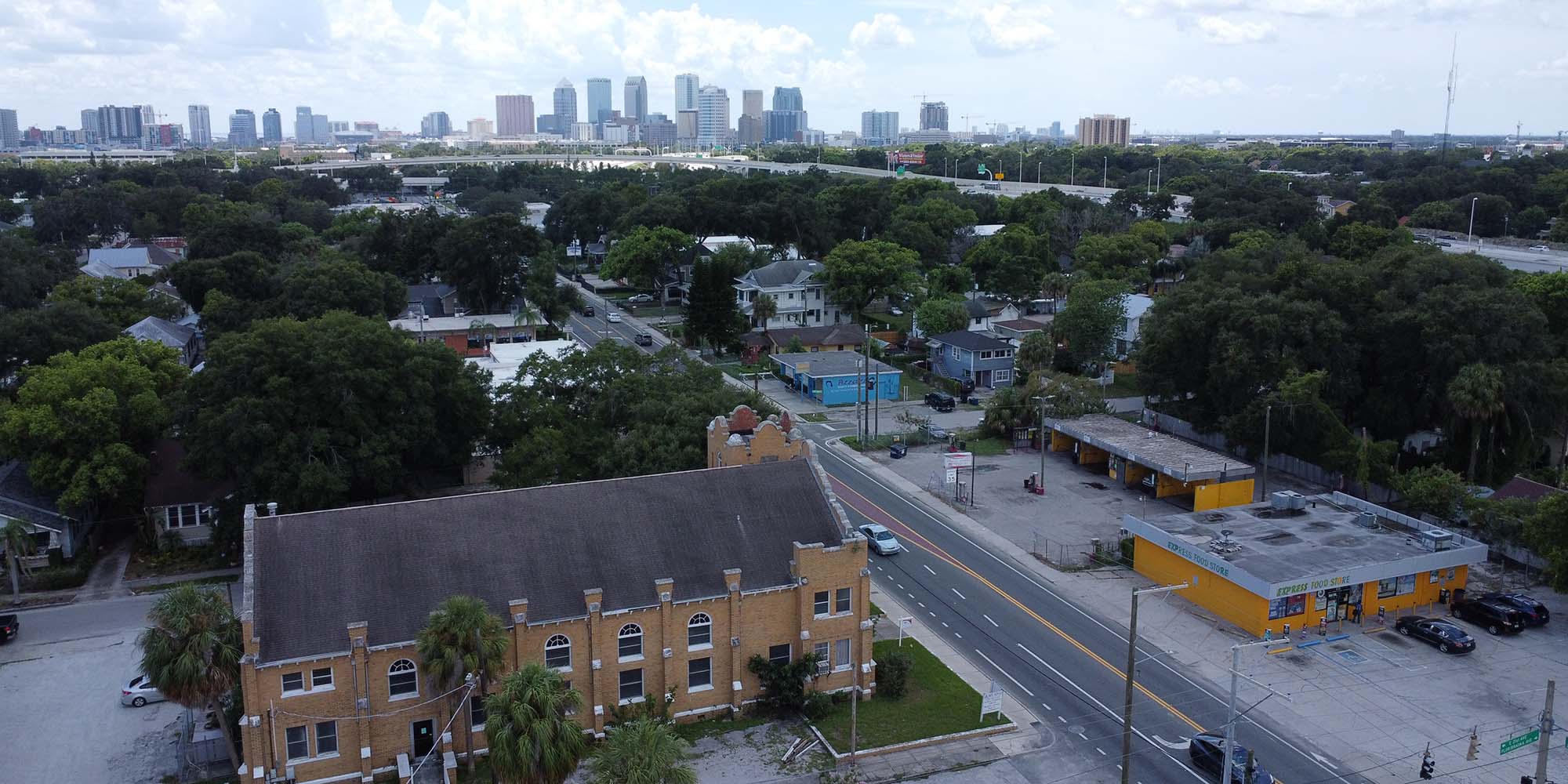
Nebraska Avenue forms the eastern boundary of this map. Borrell Park lies within the large Section 12 tract east of the Hillsborough River.
In 1883, the government granted Isaac Warner land for his homestead, which ranged from 26th Avenue to MLK along Nebraska Avenue. The park would eventually occupy a corner of his property. The Borrell Park site at this time was likely improved land serving as pasture or groves. Isaac Warner’s daughter, Katherine Warner, married Thomas E. Jackson, who served as Mayor of Tampa and lived on the opposite side of Nebraska Avenue many acres to the north. Thomas E. Jackson was the son of John Jackson, who first surveyed and mapped the Town of Tampa north of Fort Brooke, and also served a term as its mayor. John Jackson gave Nebraska Avenue its name, a tribute to his Midwestern home state.
At this time, Nebraska Avenue was an unpaved road bounded on either side by large homesteads, tens of acres in dimension, where well-to-do families maintained sizable orchards and groves. Within a decade, Vicente Martinez-Ybor would found Ybor City several miles to the south, and set the stage for the children of influential Italian immigrants to enter Borrell Park’s history.
From Homestead to Real Estate
A year after Ybor City’s founding in 1886, John H. Fessenden relocated from Ohio to Tampa. John H. Fessenden was a member of a notable family that included a statesman poet and a Secretary of the Treasury of the United States. He moved to Tampa to grow citrus and entered the real estate business, establishing himself at the successful Fessenden Real Estate Agency and becoming a prominent member of Tampa society, serving as President of the Board of Trade for Tampa, among other public, business, and philanthropic activities.
By 1899, a paved Nebraska Avenue opened a conduit for northward suburban development. The following year, John H. Fessenden created plans for a new subdivision, Bonnieventure, on a section of Isaac Warner’s former homestead. With the plans for this subdivision, the Borrell Park site became boxed into its north, south, and east boundaries. Bonnieventure spanned about 17 acres. The subdivision included lots for homes on the south side of 26th Avenue, and a large tract of land for the Fessenden family north of 26th Avenue that stretched from Nebraska Avenue to the middle of Robles Pond.
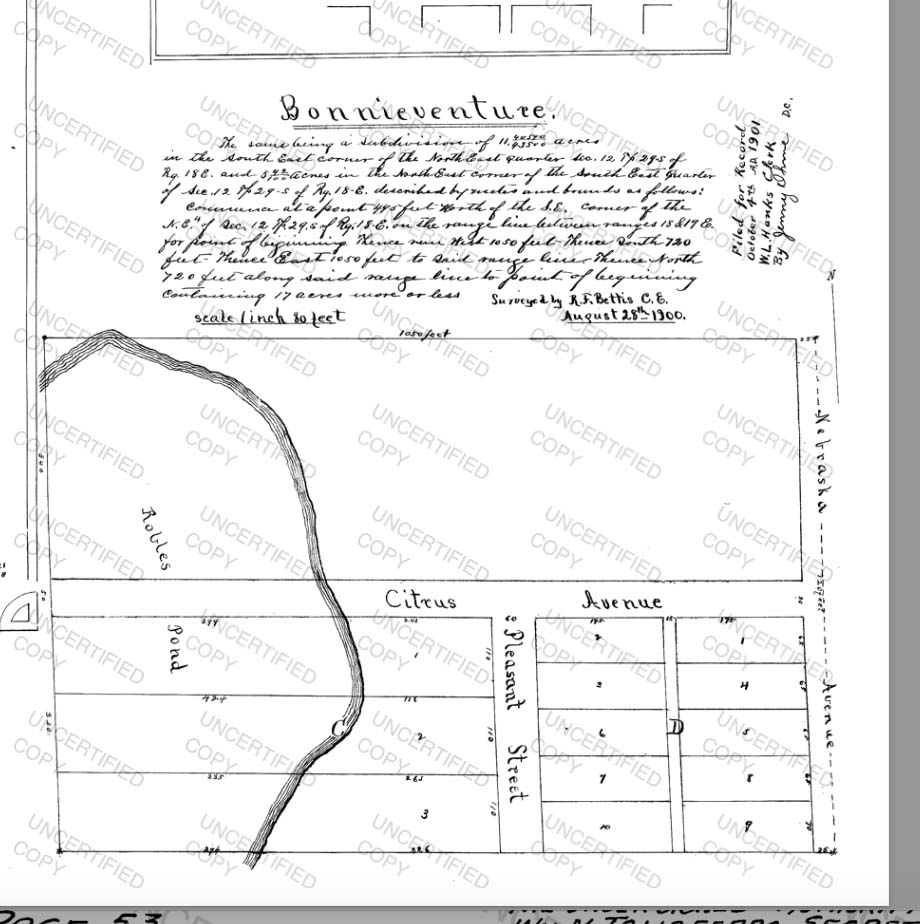
Bonnieventure – Citrus Avenue is now 26th Avenue. Nebraska Avenue can be seen on the eastern edge of the parcel, and Robles Pond on the western edge
John H. Fessenden and his wife Catherine built their exemplary two-story suburban cottage at 3402 Nebraska Avenue on the Borrell Park site, completing the structure sometime between 1901 and 1906. The property featured a rose vine fence along Nebraska Avenue, with rose bushes and scattered palmetto trees decorating the grounds. There were also groves of oranges, peaches, pecans, arbors for grape vines, servants quarters, a barn, stable, coops, fruit and vegetable gardens, beehives, and a micro farm with an overhead irrigation system.
Connections to Ybor City
While John H. Fessenden was developing subdivisions and managing his home in the rural and sparsely populated county land north of Tampa, Italian immigrants in Ybor City were busy seeking their own success. In 1916, respected Italian immigrant and dairyman Castenzio Ferlita of Santo Stefano, Sicily, formed the Cosmopolitan Ice Company and Tropical Ice Cream Company. Castenzio Ferlita was a member of the prosperous and storied Ferlita family, with members acting in important roles in banking and other industries.
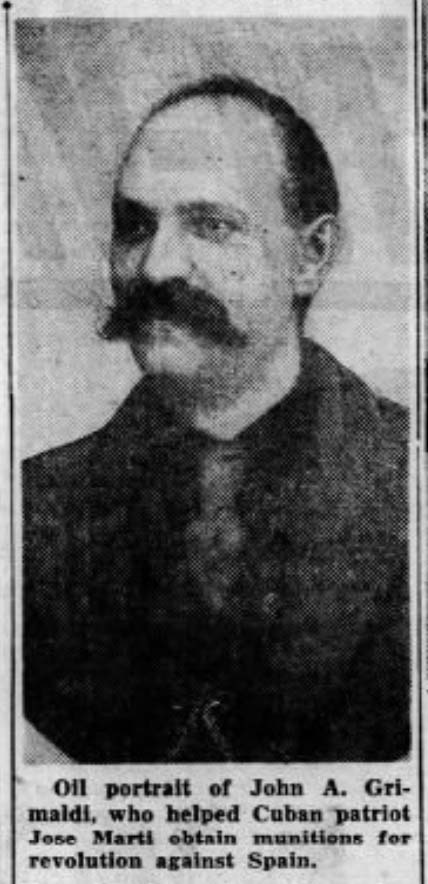
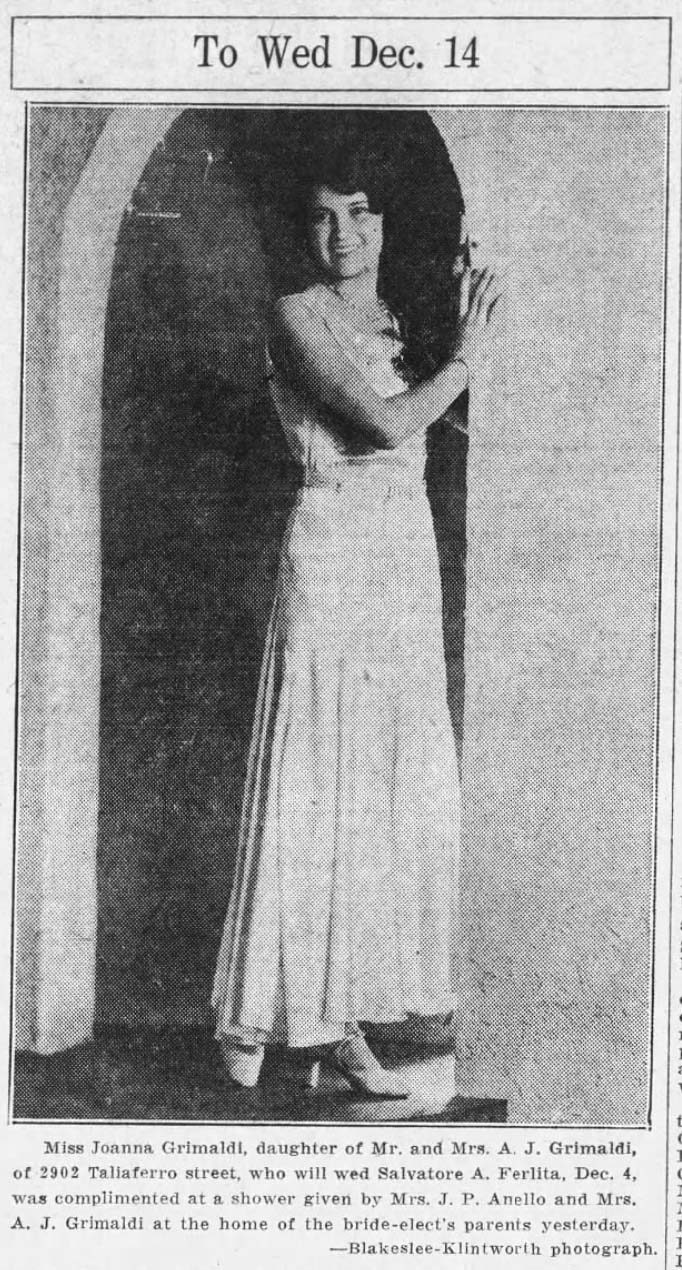
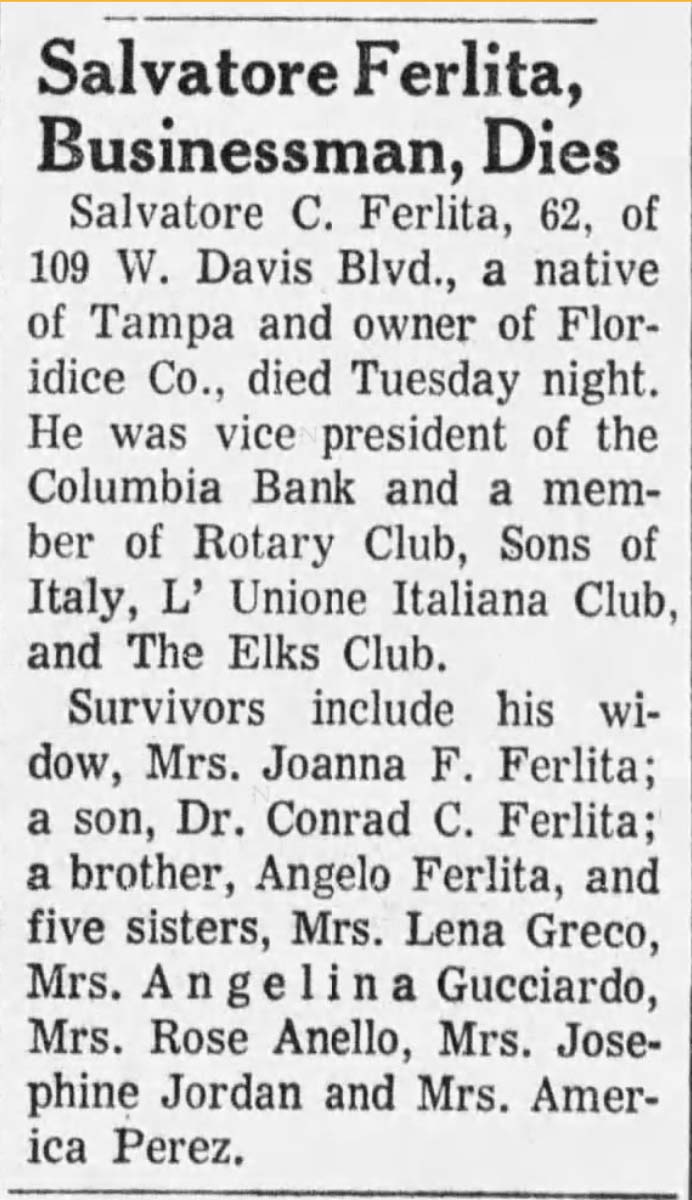
The Grimaldi family had an equally robust involvement in high-level affairs. John A. Grimaldi, President of the Societa di Italia and director of the Bank of Ybor City, among other important roles, served as Secretary of the Cosmopolitan Ice Company. The children of these two renowned citizens of Ybor City would marry, and come to play a key role in the story of the Borrell Park site. Castenzio Ferlita’s son, Salvatore, wed John A. Grimaldi‘s daughter, Joanna. Salvatore eventually inherited his father’s businesses, and Joanna remained on the board of the ice company after Salvatore’s passing.
From Fessenden Home to Florida Ice Company Plant
John H. Fessenden died on March 28th, 1922. Following her husband’s death, Catherine Fessenden became manager of her husband’s vast estate and continued her work as one of the leading women in Tampa society. Eight months after her husband’s death, Catherine Fessenden submitted plans for a subdivision on the Borrell Park site called Villa Bonnieventure, which divided their large family tract into smaller lots.
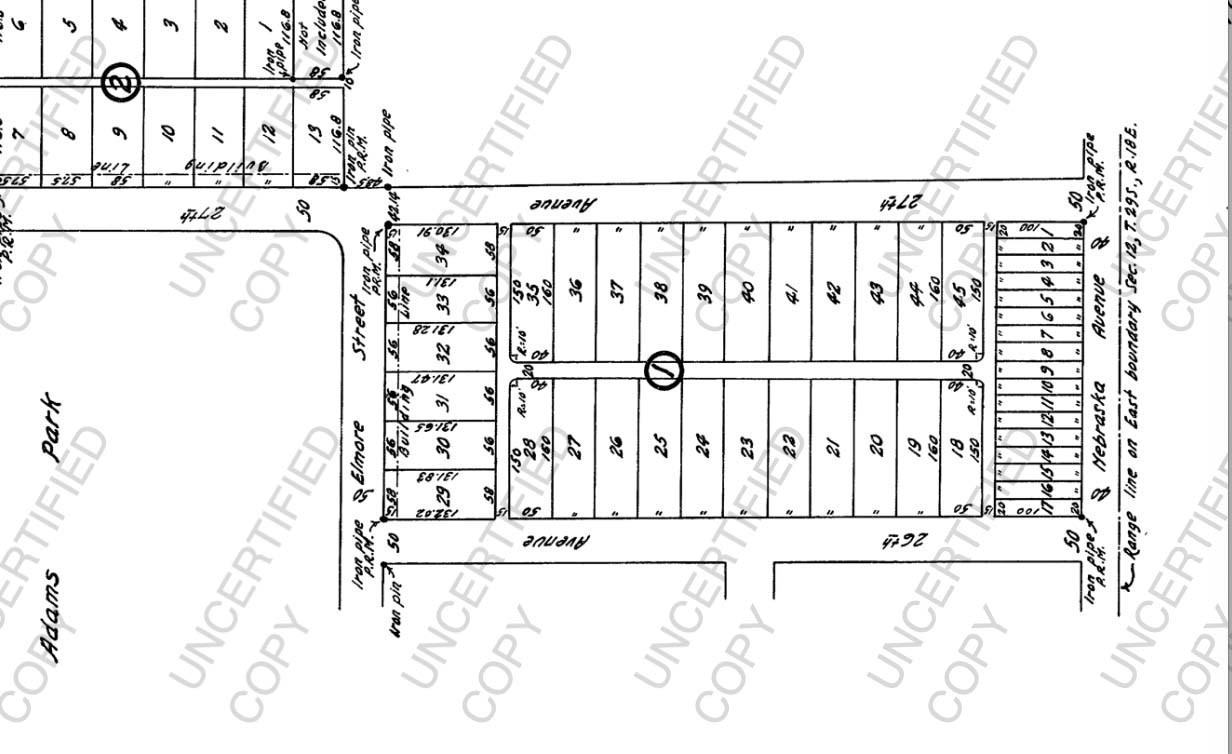
Villa Bonnieventure – “Adam’s Park” is now Robles Park.
In 1925, the iconic Fessenden home at 3402 Nebraska Avenue was irreparably damaged by a fire. Following the destruction of her landmark cottage, Catherine Fessenden moved into a nearby residence at 3408 Nebraska Avenue. In 1941, the plans for Villa Bonnieventure were revised with Catherine Fessenden signing as executor and trustee of her husband’s estate, along with Michelangelo and Lucy Vanacore and another couple, Salvatore and Angelina Caranante. The new plan replaced the lots on the interior of the site with a large central parcel.
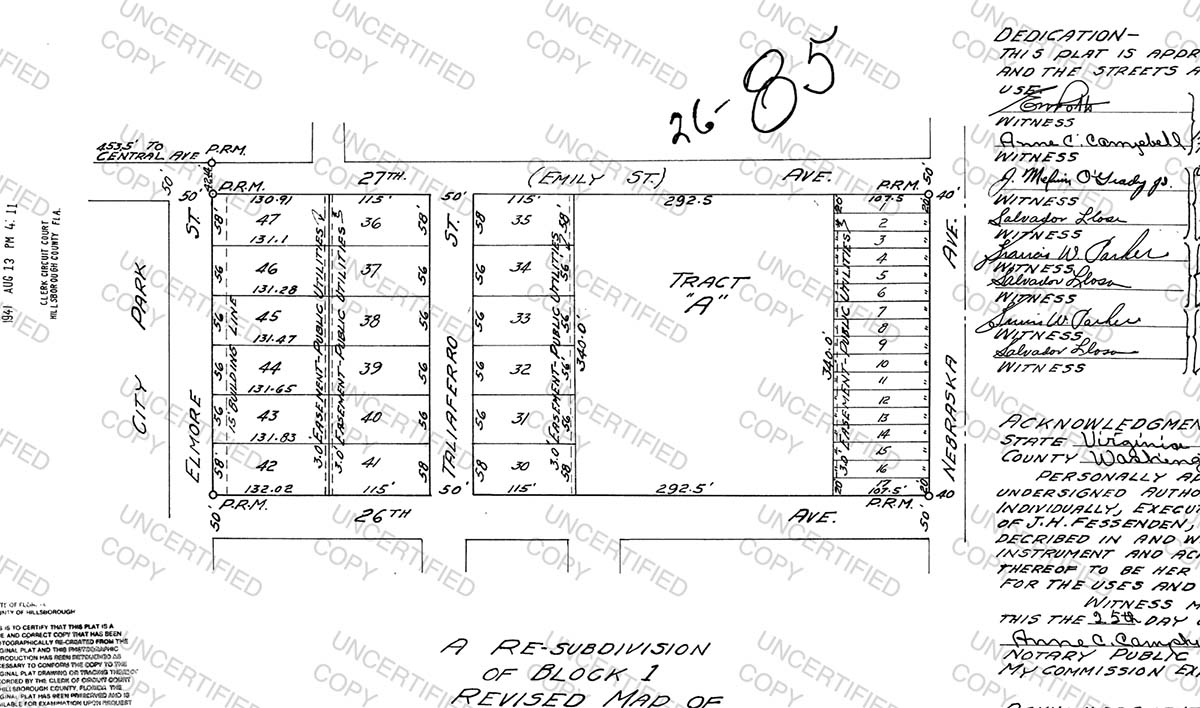
Revised Plat of Villa Bonnieventure – “City Park” to the west is now Robles Park
From Real Estate to Public Space
Around the time of Salvatore Ferlita’s death, the City of Tampa moved to purchase the site for a new Nebraska Avenue Park as part of Tampa’s Model Cities program, which allocated federal funding to remove blight in economically distressed areas under Lydon Johnson’s “Great Society” and “War on Poverty” initiatives. Joanna Ferlita sold the Borrell Park site to the City in 1970.
Despite the City’s intention to uplift the neighborhood with the construction of Nebraska Avenue Park, work faltered from the very beginning. It is unclear whether Nebraska Avenue Park ever provided a safe and welcoming environment for recreation, or if it immediately contributed to the blight it was meant to replace. In any case, Nebraska Avenue Park became a hotbed of crime, drug use, and prostitution in the decades that followed.
In 2001, Anthony Borrell, Jr., son of the Borrell Electric Company founder, donated money to install lighting and sprinklers and provided an endowment for upkeep of the park. The City repaired the sidewalks and laid sod. For his family’s contribution to the public good, the City renamed the park in honor of Anthony Borrell, Sr.
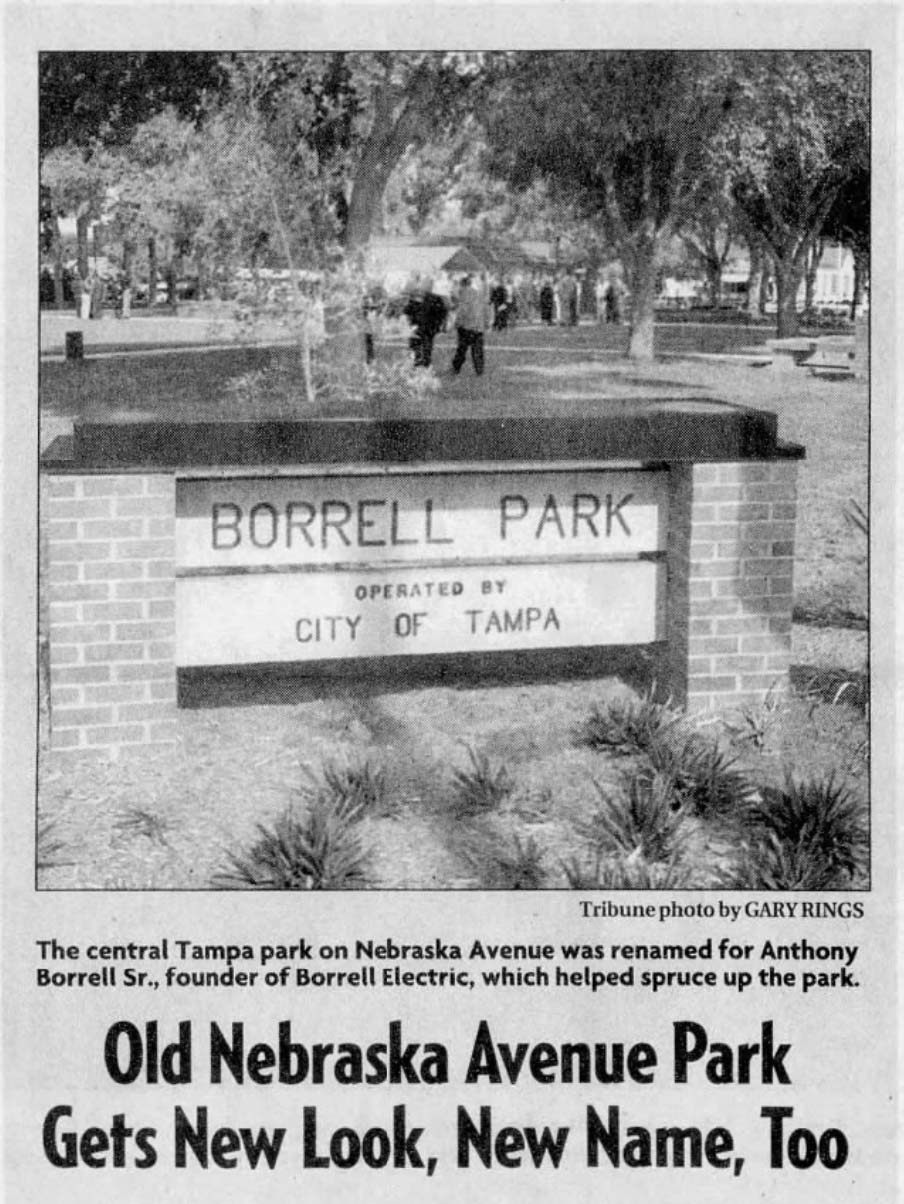
Borrell Park in the Tampa Bay Times
Present Day
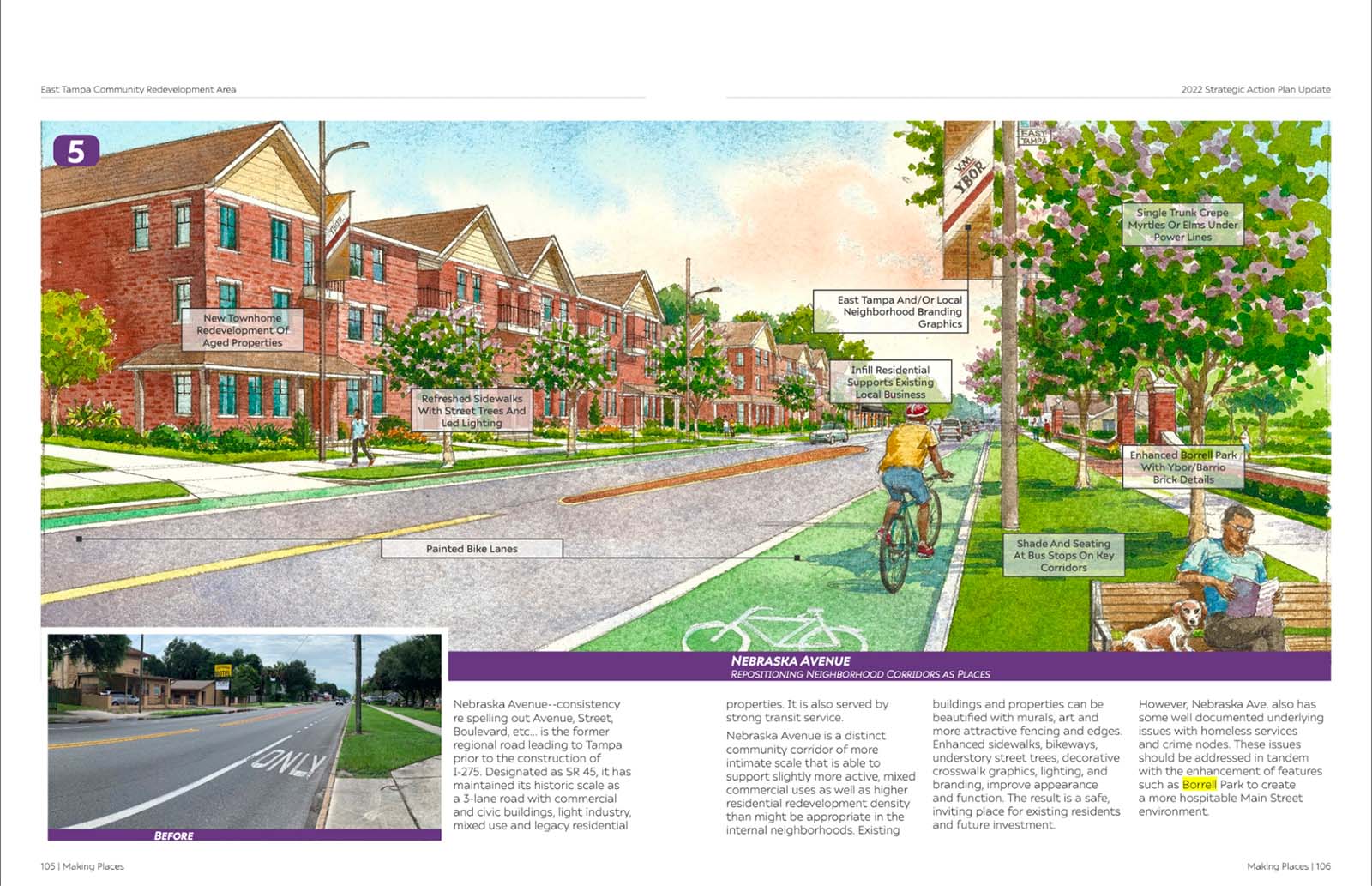
Despite all attempts, Borrell Park remains a blight on our neighborhood. Several takeaways can be gleaned from this history. The site has always served as a barometer for the socioeconomic conditions surrounding it. It is the cutaway view into an underbelly most prefer to keep covered. Sadly, as much as attempts to improve the park have been successful, these improvements have been insufficient to transform the park into a functional public space.
Borrell Park presents a study in contrasts; a vignette within which it stages its own contradictions. Trees and grass interrupt stucco and chain link, dark memories overshadow a venerable past, and the tantalizing hope for a better future clashes against the obstacles of the present. We cannot improve the park unless we also uplift our neighborhood and create a better future for all who live here.